2 minutes
Bookkeeping accounts represent your bookmaker accounts. This article explains how to create an account, read current balance, and understand why open bets reduce available funds immediately.
Table des matières
Accounts list
The Accounts page shows bookmaker, account name, currency, current balance, in-game amount, and account status. If one bookmaker has several accounts, use clear names: main account, another-currency account, or a separate live account.
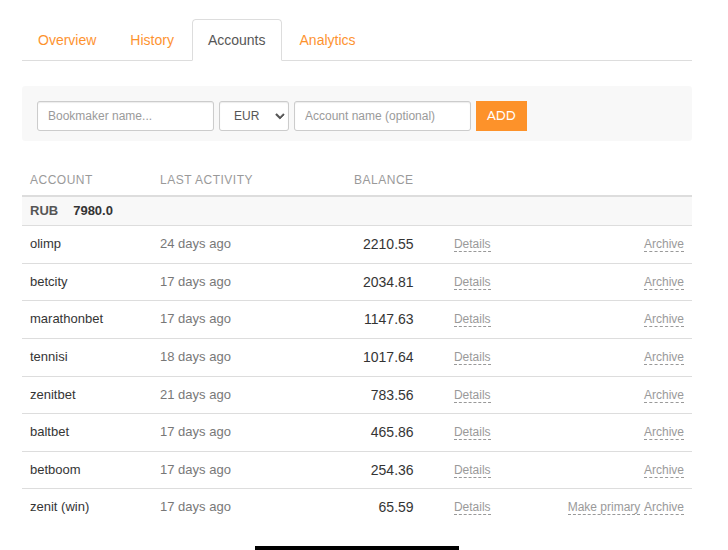
Create an account and choose currency
When creating an account, choose bookmaker and currency. The currency defines how operations, bets, and balance are stored for that account.
Deposits, withdrawals, and commission
Deposit increases balance by the deposited amount minus commission. Withdrawal decreases balance by the withdrawn amount plus commission. If there is no commission, leave it empty or enter 0.
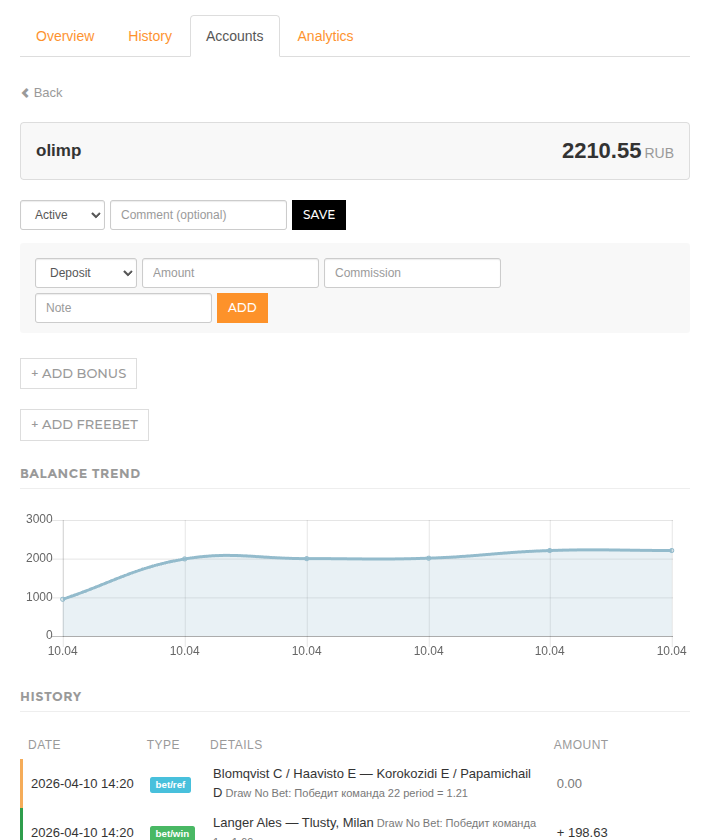
Current balance and in game
Current balance shows available funds after operations, placed bets, and settled results. A regular in-play bet reduces balance immediately because the money has already left the bookmaker account. In game shows open regular stakes; freebets are excluded.
Primary, limited, and blocked
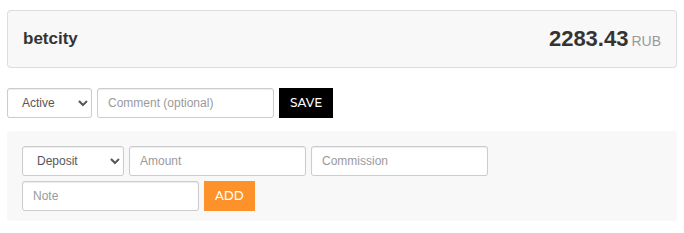
Primary marks the default account for a bookmaker. Statuses ok, limited, and blocked are operational notes. Use the note field to keep the reason, date, or next action.
Archived accounts
Archive an account when you no longer use it. Archiving hides it from the regular list without deleting historical data.
Read next
Peut être utile